

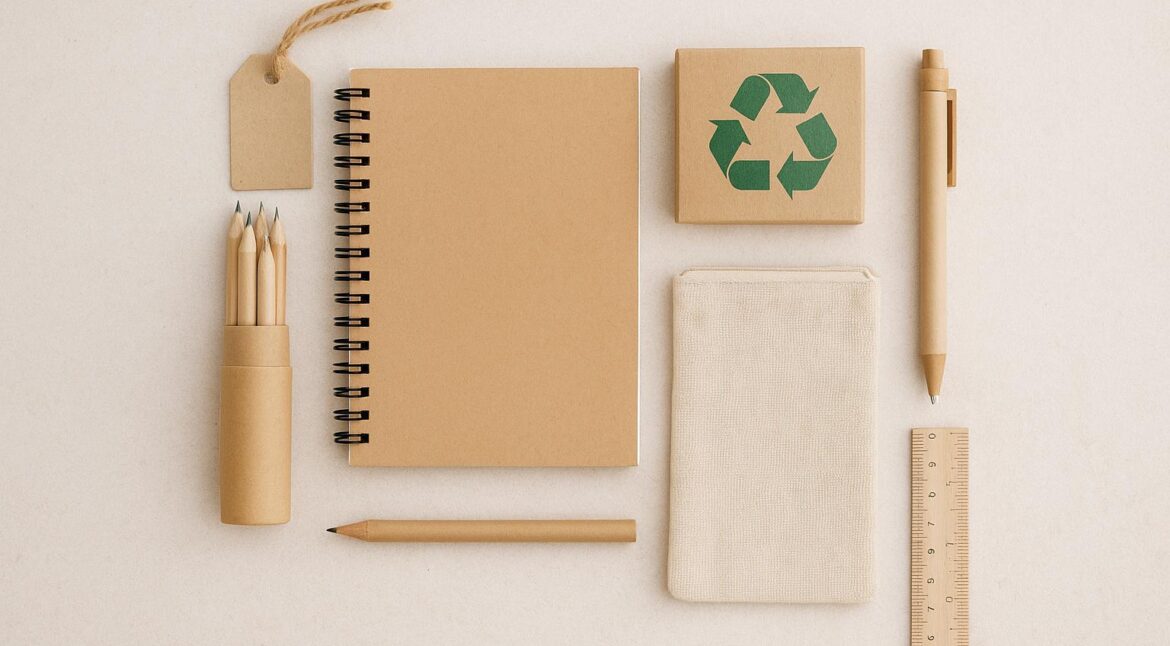
Sustainable Promotional Merchandise: 7 Powerful Ways to Make Smarter Choices
Sustainable promotional merchandise is becoming an important consideration for businesses looking to make more responsible purchasing decisions. From reusable bags and drinkware to recycled stationery and branded accessories, companies have many options when selecting promotional products for clients, employees and events.
However, choosing a product labelled environmentally friendly does not automatically make a promotional campaign sustainable. A reusable item may still have a limited lifespan, while a product made from recycled materials may not be recyclable after use.
The better approach is to consider whether the merchandise is useful, durable, responsibly sourced and appropriate for the people receiving it.
Whether you are preparing corporate giveaways, planning an exhibition or organising a client appreciation campaign, here are seven practical ways to choose sustainable promotional merchandise more thoughtfully.
1. Prioritise Usefulness Before Product Materials
The first consideration when selecting sustainable promotional merchandise should be whether recipients will actually use it.
A product that is useful and kept for a long time may provide more value than a novelty item that is quickly discarded. Consider the recipient’s lifestyle, working environment and everyday requirements before choosing merchandise.
Some practical options include:
- Reusable shopping and tote bags.
- Refillable water bottles and drinkware.
- Durable notebooks and stationery.
- Reusable lunch containers.
- Desk accessories designed for everyday use.
- Long-lasting travel and laptop accessories.
These products can be suitable for different promotional campaigns, but their environmental value depends on their materials, manufacturing, durability and actual use.
For example, a reusable bag is only useful if the recipient chooses to use it repeatedly. A promotional bottle should be practical, easy to clean and durable enough for regular use.
The objective is to select products that serve a purpose rather than simply increasing the quantity of merchandise distributed.
2. Evaluate Materials and Product Durability
Materials are an important part of responsible promotional product selection, but no single material automatically guarantees a better environmental outcome.
When comparing products, consider their composition, expected lifespan, maintenance requirements and disposal options.
Depending on the product, you may explore:
- Recycled paper and cardboard.
- Products containing verified recycled plastics.
- Recycled or responsibly sourced textiles.
- Durable materials designed for repeated use.
- Refillable or replaceable product components.
- Packaging made with clearly identified recycled content.
Ask suppliers for information about the actual material composition. If a product contains recycled content, establish what percentage is recycled and whether the claim applies to the product itself or only its packaging.
Durability is equally important. Check stitching, closures, material thickness, print quality and product functionality. A product that fails after limited use may need replacing sooner than expected.
The best choice depends on the intended application, the evidence available and the practical needs of the recipient.
3. Ask Suppliers for Evidence of Environmental Claims
One of the biggest challenges when sourcing sustainable promotional merchandise is distinguishing verified product information from broad marketing descriptions.
Terms such as green, natural, environmentally friendly and planet-friendly can be misleading when they are not supported by specific evidence.
Before approving a product, ask the supplier:
- What materials are used to manufacture the product?
- Does it contain recycled material, and what percentage?
- Is there documentation supporting the material claims?
- Are any recognised certifications applicable?
- What does the certification actually cover?
- Are the environmental claims about the product, packaging or both?
- What disposal or recycling options are available?
Where a supplier provides certification, check the issuing organisation, certification scope and validity. Do not assume that a certificate covering one material or manufacturing process automatically applies to the entire finished product.
The United Nations Environment Programme’s Guidelines for Providing Product Sustainability Information provide useful guidance on communicating product sustainability information clearly, transparently and reliably.
For businesses, the principle is straightforward: request evidence and describe products accurately rather than relying on attractive environmental labels.
4. Reduce Unnecessary Packaging
Packaging contributes to the overall materials used in a promotional merchandise order.
Individually wrapping every item, adding unnecessary inserts or using multiple layers of packaging can increase material consumption and disposal requirements.
Consider practical alternatives such as:
- Recycled or recyclable packaging where suitable facilities exist.
- Simple gift boxes with fewer unnecessary components.
- Reusable packaging that has a genuine purpose.
- Reduced individual wrapping for bulk event giveaways.
- Consolidated packaging for multiple products.
- Packaging that protects products without excessive material.
The right packaging depends on the product, presentation requirements and delivery conditions.
For executive gift sets, presentation may be an important part of the recipient experience. However, this does not mean that every item needs elaborate packaging.
A clean, well-designed package can communicate professionalism without unnecessary layers.
Also consider transport and distribution. Confirm quantities and delivery locations early so products can be packed and dispatched efficiently.
5. Choose Branding That Encourages Long-Term Use
Promotional merchandise represents the business giving it. Branding should therefore be professional, consistent and appropriate for the product.
However, excessive branding can make some products less appealing for everyday use. A recipient may be less likely to carry a heavily branded bag or use an oversized promotional design in a professional environment.
Consider a balanced approach:
- Use a suitable logo size.
- Maintain accurate brand colours.
- Choose appropriate print or engraving methods.
- Position branding carefully.
- Avoid overcrowding the product with messages.
- Check the durability of the branding finish.
Subtle branding may be suitable for reusable drinkware, executive stationery and everyday accessories. More prominent branding may be appropriate for event giveaways and campaign merchandise.
Request artwork proofs before production and inspect samples where necessary. Check that the logo remains clear, the colours are consistent and the selected branding method suits the material.
A product that recipients are comfortable using in different settings can provide a longer-lasting brand touchpoint.
6. Order Realistic Quantities and Plan Distribution
Ordering more promotional products than necessary can create unnecessary expenditure, storage requirements and unused stock.
Before confirming quantities, estimate how many products are actually required.
For an event, consider expected attendance, confirmed registrations, staff requirements and the intended distribution method. For a client appreciation campaign, prepare a recipient list and confirm quantities before production.
A responsible merchandise brief should include:
- The purpose of the campaign.
- The intended recipients.
- Product specifications and quantities.
- Material preferences and evidence requirements.
- Branding and packaging details.
- Budget and delivery locations.
- Production and delivery deadlines.
Keep a record of remaining merchandise after the campaign. Where products are still relevant, suitable and in good condition, they may be considered for future activities.
Avoid ordering excessive quantities simply because a supplier offers a lower unit price for larger orders. Consider the total cost and likelihood of using the merchandise.
7. Make Responsible Sustainability Claims
Businesses should communicate environmental product information accurately.
A product made partly from recycled material should not be described as entirely recycled. A reusable product should not automatically be described as environmentally friendly, and a recyclable product should not be promoted as recyclable everywhere if suitable recycling facilities are not available.
Be specific about what you can verify.
For example:
| Avoid vague claims | Use more specific descriptions |
|---|---|
| Completely eco-friendly | Made with 40% recycled polyester |
| 100% sustainable | Manufactured using the specified material and process |
| Fully recyclable everywhere | Recyclable where suitable facilities are available |
| Zero environmental impact | Reusable product designed for repeated use |
These examples should only be used where the relevant product information has been verified.
The US Federal Trade Commission’s Green Guides explain how businesses should substantiate and qualify environmental marketing claims, including recycled-content and recyclability statements.
The UK Competition and Markets Authority’s Green Claims Code also provides useful principles for businesses communicating environmental benefits. Although these are not substitutes for Kenyan legal advice, they offer practical guidance on avoiding misleading sustainability claims.
The most credible approach is to describe the actual product attribute, provide supporting evidence and avoid making broader environmental promises than the evidence supports.
Sustainable Promotional Merchandise Checklist
Before approving your next promotional merchandise order, use this checklist:
-
The product has a clear purpose and intended audience.
-
Recipients are likely to use it repeatedly.
-
Product materials and specifications have been confirmed.
-
Supplier environmental claims have supporting evidence.
-
Product durability and finishing have been reviewed.
-
Packaging requirements have been considered.
-
Branding is clear, professional and appropriate.
-
Quantities reflect realistic demand.
-
Delivery and distribution arrangements are confirmed.
-
Environmental descriptions are accurate and supportable.
Frequently Asked Questions About Sustainable Promotional Merchandise
What is sustainable promotional merchandise?
Sustainable promotional merchandise refers to branded products selected with consideration for their usefulness, durability, material composition, production, packaging and end-of-life options. The aim is to make more responsible product choices rather than relying solely on environmental labels.
What are examples of eco-friendly promotional products?
Potential options include reusable bags, refillable drinkware, recycled-paper notebooks and products containing verified recycled materials. However, the environmental benefits depend on product quality, manufacturing, actual use and available disposal or recycling options.
Are reusable promotional products always sustainable?
No. Reusable products are not automatically sustainable. Their value depends on how often they are used, how long they last, the materials used and what happens when they reach the end of their useful life.
How can businesses verify sustainable product claims?
Businesses can request material specifications, recycled-content percentages, supplier documentation and relevant third-party certifications. They should also check what each certification covers and whether the claim applies to the product or its packaging.
How can a company make branded merchandise more sustainable?
Start by choosing useful products, prioritising durability, reducing unnecessary packaging, ordering realistic quantities and using accurate environmental descriptions. Reviewing supplier information before approving production can also help businesses make better purchasing decisions.
Conclusion: Choose Promotional Merchandise with Purpose
Sustainable promotional merchandise is not simply about choosing products with recycled materials or adding environmental messages to branded gifts. It requires careful consideration of usefulness, durability, sourcing, packaging and responsible communication.
Businesses can make better choices by selecting products recipients are likely to use, requesting evidence from suppliers, reducing unnecessary packaging and planning realistic quantities.
When these decisions are part of the purchasing process, promotional merchandise can support brand recognition while reflecting a more considered approach to business gifting.
Planning a more responsible branded merchandise campaign? Nextgen Marketing Services can help you explore corporate giveaways, promotional products, branding options and merchandise requirements for your business or event.
Explore our corporate giveaways and branding services, browse our shop for promotional products or contact Nextgen Marketing Services to discuss your requirements. You can also learn more about our company.